Why New Homes Skip Garage Door Openers (And What to Know)
Many new homes skip garage door openers. Learn why builders leave them out and what to check before you install an opener in your new garage.
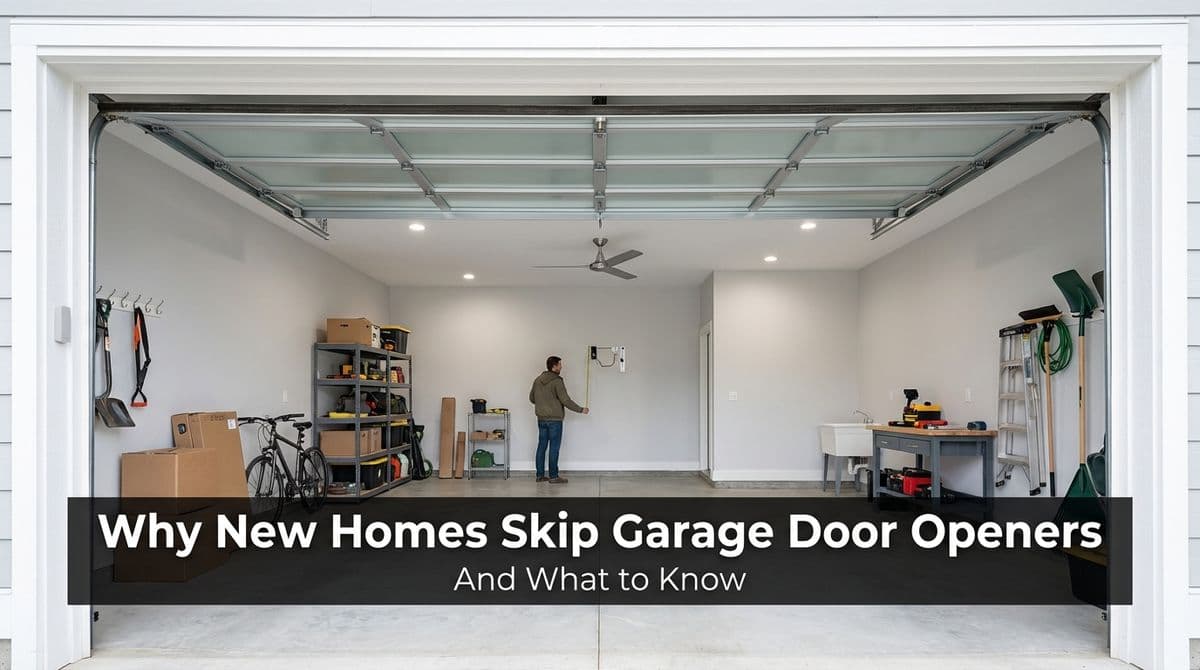
Why So Many New Homes Don’t Come With Garage Door Openers
We recently got a call from a customer — let’s call him Tom — who had just bought a brand-new home for his daughter in a shiny new subdivision. Everything looked move-in ready: fresh paint, new appliances, clean concrete in the garage. But when he hit the wall button he expected to see next to the garage door… nothing happened.
That’s when he realized: the home came with a garage door, but no garage door opener.
Tom told us, “I just assumed a new house would come with an opener. Why wouldn’t it?” And that’s a question we hear all the time in new developments, especially around the newer neighborhoods we’ve been servicing lately.
Why Builders Often Skip Garage Door Openers
In Tom’s case, the builder installed a standard sectional overhead door, rails, and springs — but stopped there. No motor, no remotes, no keypad. That’s not a mistake; it’s usually intentional. Here are a few reasons why many new homes are built this way:
- Cost control and base price: Builders like to advertise an attractive “starting price.” Leaving out openers lets them keep that base price lower and offer the opener as an optional upgrade.
- Buyer customization: Some homeowners want basic chain-drive units; others want ultra-quiet belt drives with cameras and Wi‑Fi. Rather than guessing, builders sometimes leave it for the buyer to choose later.
- Subdivision standards: In several newer neighborhoods we work in, the builder’s standard package is simply “door only” to streamline construction and inspection.
- Third-party installers: Many builders prefer a dedicated garage door company (like us) to handle motors and accessories after closing, instead of having their general contractor do it.
The bottom line: if you’re buying a new home, never assume an opener is included. Ask your builder what’s standard and what’s considered an upgrade.
What We Check Before Installing a New Opener
When Tom called, he wasn’t even sure whether the door was 7 feet or 8 feet tall — another very common question. That matters, because the opener rail and hardware need to match the door height.
Since we work in his subdivision all the time, we told him we’d do what we call a quick pre-site. That simply means we swing by, visually confirm the door size and setup, and make sure there aren’t any surprises before installation day.
Here’s what we typically look for in a new-construction garage:
- Door height: Most residential doors are 7', but some homes use 8' doors for taller vehicles. The opener has to be sized and set up correctly for that height.
- Power source: We check for a properly placed ceiling outlet near the center of the garage door opening.
- Headroom and clearance: We verify there’s enough space above and behind the door for the opener rail and motor.
- Door condition: Even brand-new doors can be out of balance or misadjusted. A poorly balanced door is hard on any motor.
This quick check helps us bring the right opener, rail, and hardware the first time and avoid delays for you.
Why Reinforcement Hardware Matters (Even on a Brand-New Door)
During our call, we also explained something Tom had never heard of: reinforcement. When you add a garage door opener, you’re attaching a motor that’s going to pull and push that top section of the door thousands of times over the years.
That’s why we strongly recommend — and often provide — two pieces of hardware if they’re not already installed:
- Steel strut: A horizontal steel bar that runs along the top section of the door to keep it from flexing and bowing as the opener operates.
- Reinforcement bracket: A heavy-duty bracket where the opener arm connects to the door, spreading the stress over a larger area.
Without proper reinforcement, the top section of the door can crack or bend over time, especially on larger or insulated doors. Many brand-new doors don’t come with these factory-installed, so we check and add them as needed during the opener install.
The Type of Opener We Recommend for Most New Homes
For Tom’s house, we recommended the same opener we’ve been installing for decades: a LiftMaster chain drive. We’ve been putting these in for around 20 years, and they’ve proven to be a reliable “workhorse” motor for standard residential doors.
Our typical installation includes:
- LiftMaster chain-drive opener sized for your door
- One remote (clicker) for the car
- Wall-mounted control button inside the garage
- Photo safety eyes at the bottom of the tracks, to bring you up to current safety code
- Any needed reinforcement hardware for the door
From there, homeowners can add extras like outside keypads, additional remotes, or smart Wi‑Fi controls as they like.
Questions to Ask Before You Install an Opener
If you’re in a new home without a garage door opener, here are a few smart questions to ask your installer (or your builder):
- Is my door 7' or 8', and will the opener and rail be sized correctly?
- Is the door properly balanced and in good working order before the motor goes on?
- Will you install or verify a steel strut and reinforcement bracket?
- Are safety eyes and a wall control included, and will everything be brought up to current code?
- What kind of warranty comes with the opener and the installation?
Tom was relieved to learn that even though his new home didn’t include an opener, getting one installed correctly was a straightforward process. Once we pre-sited the door and confirmed the details, we scheduled the install, brought all the necessary hardware, and had his daughter’s garage opening smoothly and safely the same day.
If you’ve just moved into a new build and discovered you’ve got a manual garage door, you’re not alone. With a little planning — and the right hardware and opener — you can turn that bare-bones garage into a safe, convenient entry point to your home.